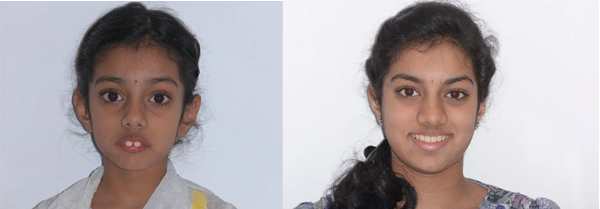
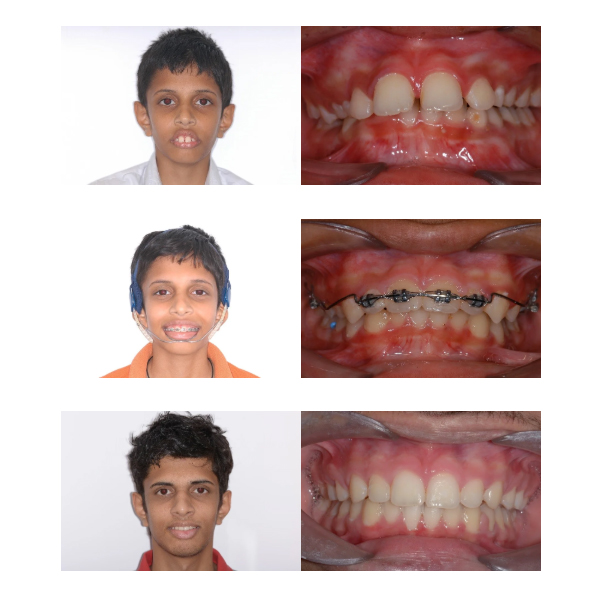
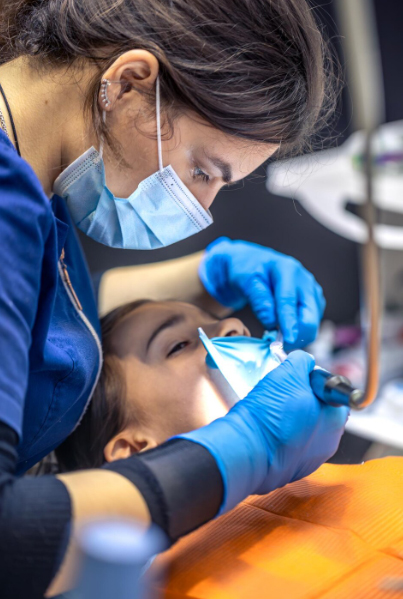
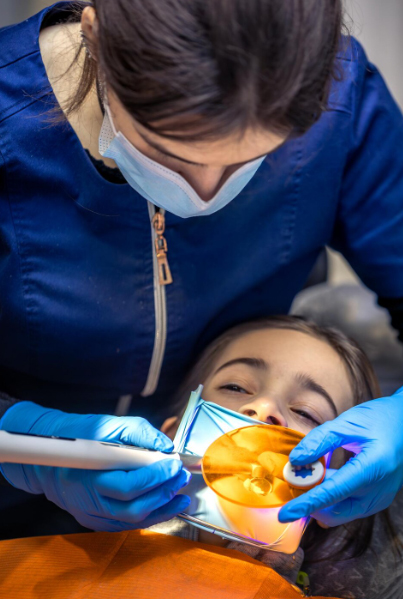
The American Association of Orthodontists recommends that children receive an orthodontic screening by seven years of age. Though a visit to your orthodontist may seem unnecessary at such a young age, especially if the child’s teeth look straight, there may be underlying problems that only an orthodontist can detect. By the age of 7, the first adult molars erupt, establishing the back bite and the front four adult teeth are erupting or will be erupting shortly. During this time, an orthodontist can evaluate front-to-back and side-to-side tooth relationships and detect problems such as crowding, crossbites, deep bites, open bites, protruding teeth, facial asymmetries and habits that may cause harm to the way teeth come together. Timely screening increases the chances for a sensational smile later in life.
For patients who have clear indications for early intervention, early treatment, referred to as Phase 1 treatment, presents the opportunity to:
1.Influence jaw growth in a positive manner.
2.Harmonize width of the dental arches.
3.Improve eruption patterns.
4.Lower risk of trauma to protruded upper incisors.
5.Correct harmful oral habits.
6.Improve aesthetics and self-esteem.
7.Simplify and/or shorten treatment time for later corrective orthodontics.
8.Reduce likelihood of impacted permanent teeth.
9.Improve some speech problems.
10.Preserve or gain space for erupting permanent teeth.
Early Treatment is not indicated for everyone. Only certain bites would benefit from early intervention. In most instances, it is best to wait until all the baby teeth are nearly gone before starting orthodontics.
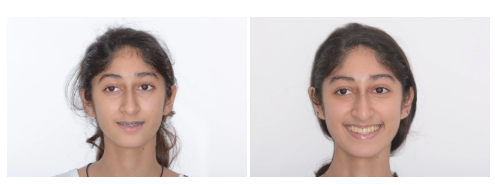
Dr. NRK conducts a thorough diagnosis and considers each patient’s individual needs to determine the optimal time to begin treatment. In some cases, Phase I or early treatment to correct jaw problems can help permanent teeth erupt in a more favourable position, potentially avoiding a second phase of treatment with braces. However, Phase II treatment may still be necessary in some cases, as additional treatment may be required once all the permanent teeth have erupted.
Once all the permanent teeth are in, the next round of treatment (usually called Phase II orthodontics) would serve to perfect the positions of the adult teeth for optimal comfort, function, esthetics, and long-term stability.
Visit the Smile Gallery for entire range of Services offered at NRK Orthodontics.
Advantages of Two phase Treatment
Treatment for Youth
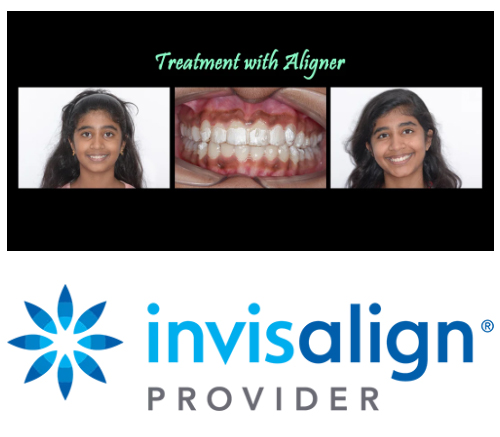
Treatment using Invisalign & Other Aligner
Orthodontic Treatment for Adults
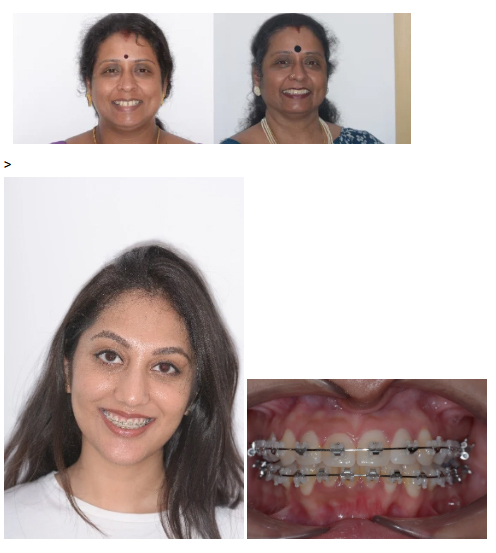
Orthodontic treatment is no longer just for teens; in fact, the American Association of Orthodontists sites that one in five orthodontic patients is over the age of 21! Many adults are choosing to receive treatment because they understand the importance of maintaining their health, and they want to feel better about their appearance. Adults everywhere are taking advantage of the opportunity to receive orthodontic care, and now you can too.
Common reasons why adults may consider orthodontic treatment:
1. A bad bite, or malocclusion, causing teeth to fit together incorrectly.
2. Crowded or irregular teeth can make proper brushing and flossing difficult, increasing the risk of tooth decay and gum disease.
3. Spaced teeth may affect the overall appearance of the smile and can sometimes impact proper tooth function.
4. Irregular or uneven teeth can place abnormal pressure on the jaw, making opening and closing the mouth uncomfortable or difficult.
4. Misaligned teeth can also make chewing food more challenging and may affect overall oral function.
Orthodontic treatment can help improve tooth alignment, oral function, and the overall health of the mouth.
Treatment options for adults
For many adults, the thought of having metal braces is enough to discourage them from receiving treatment. Today’s orthodontic treatment options however, offer a variety of braces and appliances that are comfortable, aesthetic, and customized to meet your needs.
Types of braces include:
1. Clear braces
2. Ceramic braces
3. Self-ligating braces
4. Lingual (behind the tooth) braces
5. Invisible braces
6. Traditional metal braces
The difference between adult orthodontics and orthodontics for children and teens:
There are actually not many differences between adult and child orthodontics; however, in children and teens the jawbones are still developing. For adults, these bones have stopped growing, which may mean the possibility of orthognathic surgery, in which the jawbones are surgically aligned.
Other differences include:
1. Gum or bone loss (periodontal disease) — Adults are more likely than children to experience gum recession or even bone loss due to gingivitis or advanced periodontal disease. Patients with straighter teeth are less likely to get gum disease.
2. Worn or missing teeth — Over time teeth can become worn down and shift into different positions that can only be corrected with orthodontic care. Missing teeth can cause other teeth to shift and tilt creating a bad bite and the possibility of getting gum disease.
3. Incomplete orthodontic treatment as a teen — Many adults received some orthodontic treatment as a child or teen, but never completed their treatment. As an adult, they choose to complete their orthodontic treatment to achieve the healthy, beautiful smile they always wanted.
4. Our practice also recognizes that adults and children have different needs, and require a different level of attention and care. We will work with you to ensure that you receive the most appropriate treatments, and that your needs are met with understanding, respect, and full commitment from us.
Why should you consider orthodontic treatment?
Straight teeth are healthy teeth — Teeth that are properly aligned are easier to keep clean with flossing and brushing, and may help prevent other health problems.
A beautiful, straight smile builds confidence — Orthodontic treatment can help boost your self-confidence, giving you a better quality of life and the freedom to smile without holding back!
Mouths left untreated can get worse — Not receiving orthodontic treatment when it’s needed can create long-term health issues, and end up costing you more in the end. To learn more about the benefits of adult orthodontics please contact our practice to schedule an appointment. We understand that you have a busy schedule, and we will work with you to make sure each office visit is as convenient as possible.

Treatment for jaw joint disorder (TMJ)
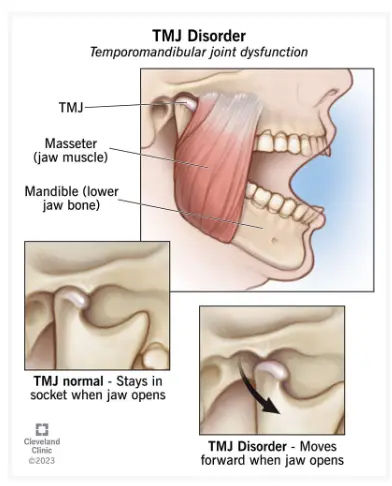
Temporomandibular joint dysfunction (TMD, TMJD) is an umbrella term covering pain and dysfunction of the muscles of mastication (the muscles that move the jaw) and the temporomandibular joints (the joints which connect the mandible to the skull). The most important feature is pain, followed by restricted mandibular movement, [2] and noises from the temporomandibular joints (TMJ) during jaw movement. Although TMD is not life-threatening, it can be detrimental to quality of life.This is because the symptoms can become chronic and difficult to manage.
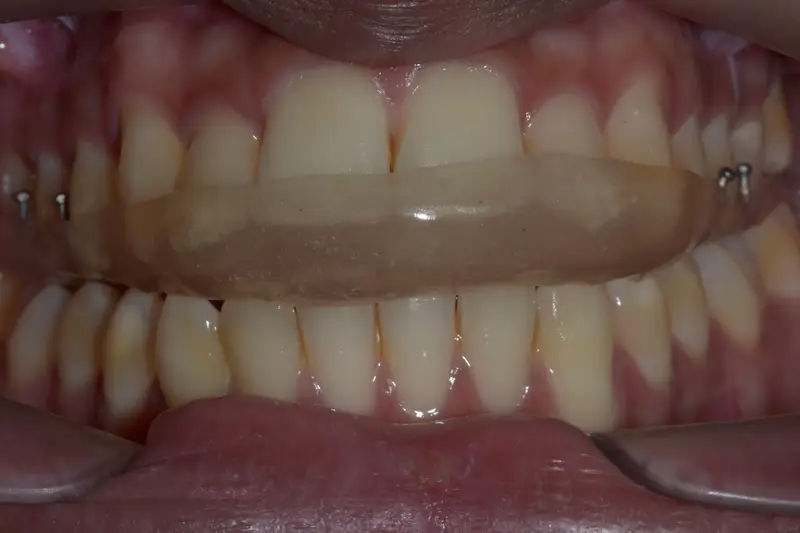
Splint for eliminating jaw fatigue and for restoring normal mouth opening
Bad bite which can induce muscle and joint pain
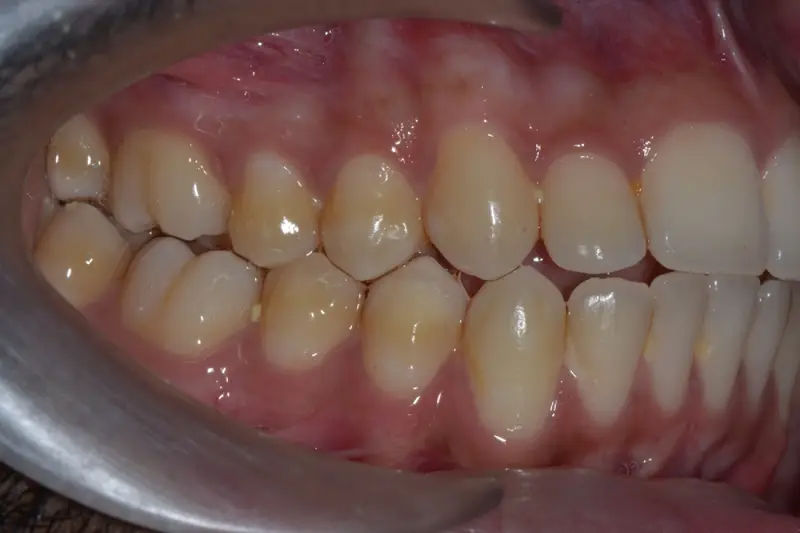
TMD is multifactorial in origin and malaligned teeth and bad bite can alter the path of opening and closing the mouth thereby trigger muscle fatigue and joint pain .If unattended it can lead to jaw joint pain .limitation in opening of the mouth eventually leading displacement of the disk tha of the joint.
DR NRK has had special training for 2 years at the Roth William Foundation to treat Jaw Joint disorder Cause due to improper chewing habits and irregularity placed teeth.
The diagnosis involves clinical examination , using special devices called articulaters which can simulate jaw movement ,CBCT scans for the joint ,which will reveal the joint anatomy and pathology in multiple planes
Based on the diagnostics the treatment involves using special splints followed by treatment with orthodontic braces or Surgery.
What is obstructive sleep apnea?
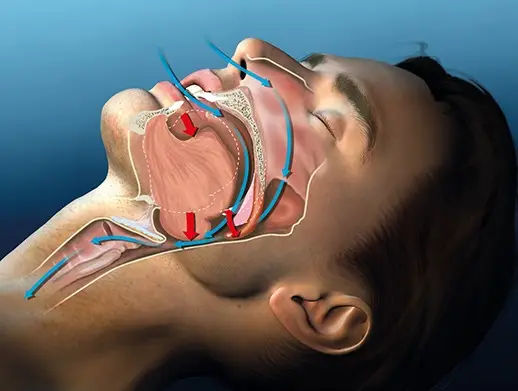
Obstructive sleep apnea (OSA) is a condition where a blockage or narrowing in your airway keeps air from moving through your windpipe when you’re asleep.
The blockage and lack of airflow can cause your blood oxygen levels to drop. This triggers a survival reflex in your brain that wakes you up just enough to breathe again. While that reflex is key in keeping you breathing, I t also disrupts your sleep.
If you have frequent wakeups at night, you won’t feel rested in the morning. That can lead to a wide range of symptoms, many of which can affect your daytime functioning. Over time, these symptoms can lead to dangerous and sometimes life-threatening complications.
A healthcare provider can help you manage symptoms of OSA.
Oral Appliances for Sleep Apnea
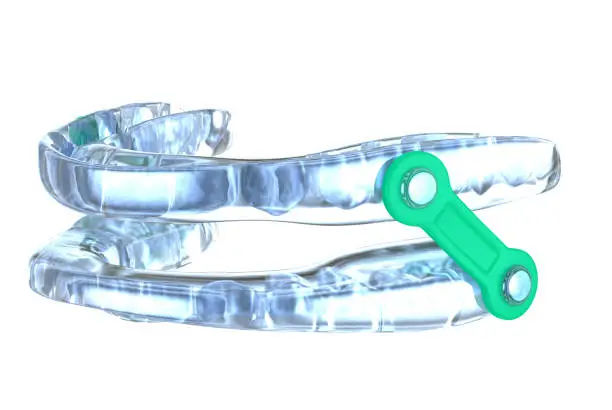
Oral appliances for sleep apnea work by pulling your jaw or tongue forward while you sleep, opening your airway. Your healthcare provider may recommend an oral appliance to treat obstructive sleep apnea if you can’t use a CPAP machine. Types include mandibular advancement devices and tongue-stabilizing devices.
One of the methods of treating sleep Apnea is to use an appliance (removal brace) that will keep the lower jaw postured in front during sleep. This will open the Windpipe so that the air can flow in and out of the lungs without any obstruction. Dr NRK is well trained to treat sleep apnea with removal Oral Appliance.
044-2436 2121,
044-2435 9121,
+91-99402 34621.
Copyright © 2026 All Rights Reserved.
Dr . NRK is the one of the best and highly skilled dentists around, also very friendly! I went through my braces journey with them, for around 4yrs, and it was an incredibly smooth experience and everything was done perfectly. My teeth are now perfectly aligned with no problems. I enjoyed going there! It was a very warm and welcoming place I will surely be missing everything about it.
Sreeram